A Hands-On Review of the ER Nurse St. Patrick's Day SVG
When a new design lands in my embroidery project folder, my first question is always: where does this belong in the real world? I'm not just looking at pixels on a screen; I'm imagining stitches on fabric, seeing the finished product in a customer's hands, and weighing its practical application. The ER Nurse St. Patrick's Day SVG immediately presents a specific and charming niche. This isn't a generic holiday graphic; it's a targeted, heartfelt nod to a demanding profession, wrapped in seasonal cheer. From a designer's perspective, that’s a solid starting point.
The Immediate Mood and Visual Personality
This design feels celebratory and appreciative. The theme cleverly bridges professional identity with a lighthearted holiday, creating a mood that’s both respectful and fun. It speaks directly to emergency room nurses, their friends, and family looking for a personalized gift. The layout likely combines text with thematic St. Patrick’s Day elements—think shamrocks, perhaps a playful “Luck of the ER” twist—in a way that’s meant to be recognizable and embroidery-friendly. My first impression is that it has a clear purpose. It’s not trying to be everything to everyone; it’s a design with a specific audience, which, for crafters and small business owners, is often a stronger selling point than a vague, all-purpose motif.
Where This Design Thrives in Real Projects
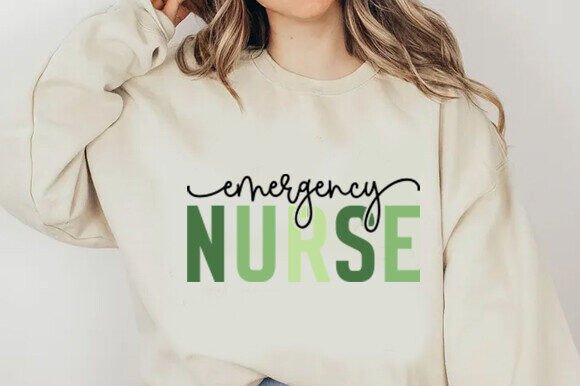
Let’s walk through a typical scenario. Imagine an Etsy seller preparing for the March craft fair rush. They want to offer unique, personalized gifts that stand out. This embroidery file could be the perfect centerpiece for a custom embroidered sweatshirt or a sturdy tote bag for a nurse who carries their world with them. The appeal is immediate: it’s a gift that acknowledges both their tough job and a moment of celebration.
For apparel decorators, it naturally fits on the left chest of a polo shirt for a hospital department’s casual St. Patrick’s Day event, or as a larger feature on the back of a hoodie. As a embroidered patch, it could be fantastic—ironed onto a backpack or a work apron. In a baby embroidery context, if scaled appropriately, it could make a sweet and sentimental “my mom is an ER nurse” design on a baby blanket or a tiny tee, turning a professional pride into a family keepsake.
For holiday embroidery specifically, think beyond apparel. A neatly stitched version on a kitchen towel or a pillow cover could be a wonderful, subtle holiday decor item for a nurse’s home. The design’s value here is in its specificity. It creates a connection. When a customer sees it, they either identify with it directly or immediately know someone who would. That’s the kind of engagement that builds customer trust and turns a simple handmade product into a meaningful purchase.
Practical Considerations for Stitching Success
Now, for the realistic part. How does this machine embroidery design translate from digital file to physical stitches? Without knowing the exact stitch count or density from the description, a professional approach is always cautious. The charm of such a design often lies in smaller decorative accents and lettering. Here’s where you need to think practically.
If the design includes tiny shamrock details or fine script, you must be mindful of hoop size and fabric texture. Embroidering this on a thin, stretchy tee without the right stabilizer could lead to puckering and distorted lettering. For stitch clarity, it’s often wiser to place it on more stable fabrics like a canvas tote, a denim apron, or a mid-weight sweatshirt. Dark fabric backgrounds require careful thread color contrast planning—will the traditional greens and whites pop, or do you need to adjust to brighter tones?
On curved surfaces like caps, the layout must be examined. Any elements extending to the edges need to be tested on a scrap first to ensure they don’t get lost in the seam. The potential for dense stitch areas, especially in filled shamrocks, means checking that the design doesn’t become too thick and stiff for lightweight baby clothes or garments needing frequent washing.
Designer Notes for a Smooth Embroidery Project
Before committing this to a client’s order or your own craft business merchandise, follow these steps. First, test the design on scrap fabric that mimics your final product material. This reveals any issues with stitch density or small details. Second, run it through both black and white printable mockups to see how the silhouette holds up; a good design should be recognizable even in outline. Compare it on light and dark backgrounds digitally to plan your thread palette.
Always confirm the licensing for this digital embroidery file. The description notes it’s “ready to print” for crafting, but for commercial embroidery and selling finished products, you must ensure your use is covered. This protects your small shop product and maintains professionalism. Finally, consider the final presentation. A clean, well-stitched version of this design on a high-quality towel or sweatshirt elevates its giftability and supports your brand consistency as a maker.
A Design That Builds Connection
Ultimately, the ER Nurse St. Patrick's Day SVG isn’t just a graphic; it’s a potential conversation starter stitched onto fabric. Its practical value lies in its focused appeal. For creative entrepreneurs, it fills a niche in the holiday market that’s often overlooked: profession-specific celebration. It encourages you to think about your customer’s identity, not just the holiday. When executed well with attention to fabric choice, thread contrast, and crisp stitching, it becomes a product that feels thoughtful and custom-made, which is exactly what drives engagement in today’s marketplace for handmade and personalized gifts. Approach it with a tester’s mindset, respect its licensing, and it could be a rewarding addition to your seasonal embroidery project lineup.