Evaluating the All American Nurse Flag Messy Bun Embroidery Design
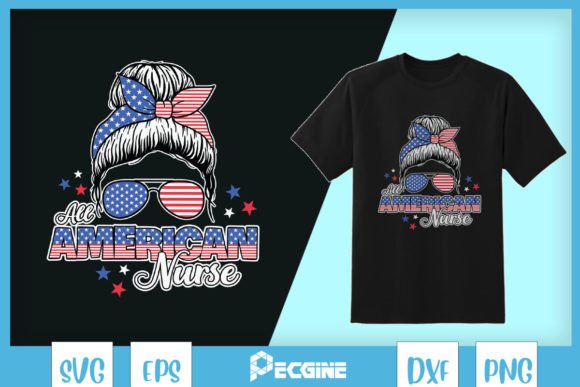
When I first opened this embroidery design, I was struck by how cleverly it balances two powerful themes. The ‘All American Nurse Flag Messy Bun SVG’ isn’t just a graphic; it’s a tribute. It has that proud, patriotic heart, fused with the everyday heroism of nursing, all wrapped up in a relatable, modern silhouette—the messy bun. The mood it creates is one of sincere appreciation and contemporary pride. It feels less like a formal emblem and more like a wearable badge of honor, something personal and authentic. For an embroidery designer, that’s a promising start. The layout is clean, with the bun shape providing a natural, organic anchor for the flag and text elements. The detail level seems thoughtful; it’s not overly intricate, which suggests it will translate well into stitches without becoming a dense, stiff patch on fabric.
The First Project Test: A Custom Embroidered Tote Bag
My instinct for its first real-world test was a tote bag. I imagined a nurse, perhaps heading to a long shift or a study session, carrying a bag that quietly speaks to her identity. Tote bags are a fantastic canvas for this kind of design. They have a broad, flat surface, usually in a stable, medium-weight fabric like canvas or cotton twill. This stability is key. As I prepared the design in my software, the pre-sized SVG file was a genuine convenience, letting me quickly position it without worrying about scaling errors. I thought about stitching it out. The flag’s stripes and the lettering would likely use a satin stitch for a smooth, bold finish, while the bun’s outline might be a running stitch or a lighter fill to keep the texture soft. The overall composition is open, avoiding overly dense stitch areas that can make a bag feel rigid or heavy.
Where This Design Finds Its Home
This embroidery file has a surprisingly wide range of potential homes beyond the obvious t-shirt. It feels tailor-made for a heartfelt gift. A personalized sweatshirt for a nursing student graduating, a cozy blanket for a nurse friend, or even a crisp apron for a home healthcare worker—it carries that giftable, ‘I see you’ quality. For small business owners and Etsy sellers, it taps into a niche with deep emotional resonance. Think of boutique merchandise for hospital gift shops, or custom patches for nurse lanyards. As a digital product seller, offering this as part of a curated ‘Healthcare Heroes’ collection makes business sense. The high-resolution PNG is perfect for creating printable mockups, allowing customers to visualize the finished product on different items before they buy the embroidery file itself.
For apparel decorators, it’s a strong candidate for left-chest embroidery on polo shirts or lightweight jackets—a classic spot for a professional yet personal logo. The design’s visual personality is confident but not aggressive, which boosts the perceived value of the handmade product. When a customer sees this embroidered on a item, the clarity of the stitching and the relevance of the theme builds immediate trust and engagement. It feels specialized, not generic.
Navigating the Tricky Terrain: Where to Use Caution
While the design is adaptable, an experienced hand knows where to proceed carefully. The inclusion of text within the bun shape means those letters need to remain clear. On very small hoop sizes, or on highly textured fabrics like some sweatshirt materials, small lettering can get lost or become blurry. I would avoid running this on very thin or stretchy fabrics without exceptional stabilizer and perhaps even a backing patch, as the combined elements could cause puckering.
Dark fabric backgrounds require a bright, contrasting thread palette—white and reds against navy blue, for instance—to keep the flag vibrant. Embroidering on curved surfaces, like the crown of a cap, demands extra attention to placement so the bun shape doesn’t get distorted. And for products destined for frequent washing, like baby clothes or kitchen towels, you’d want to ensure the stitch density isn’t so high that it creates a stiff area that cracks over time. The design’s open layout suggests it should fare well, but always test first.
Practical Notes from the Embroidery Machine
Before I ever stitch this for a client or my own craft business products, I follow my own routine. I’ll test it on scrap fabric of the same type I intend to use—maybe a piece of canvas for that tote bag, or a cotton blend for a t-shirt. This reveals everything: the true thread color contrast, whether any tiny details like the stars need adjustment, and how the overall stitch density feels. I check the required hoop size against my machine’s capabilities and the physical size of the final product. A baby bib can’t handle a 6-inch hoop design, for example.
I also run a simple but crucial visual test: I look at the design in black and white in my software. This strips away color and shows me pure form—are the shapes distinct? Does the text read clearly? Comparing how it will look on both light and dark backgrounds in a mockup helps plan thread inventories. Using the proper stabilizer for the chosen fabric is non-negotiable; it protects the clarity of the design and the integrity of the garment.
Finally, and this is critical for commercial embroidery and digital product sellers: I confirm the licensing. The product description mentions included formats for design software use, but it doesn’t spell out commercial terms. Before selling finished embroidered items like patches, holiday gifts, or small shop merchandise, or before bundling this file into your own digital product listings, you must verify that your intended use is permitted. This protects your business and maintains professionalism.
The Final Stitch: A Design That Connects
The ‘All American Nurse Flag Messy Bun SVG’ succeeds because it understands its audience. It’s not a cold, graphic asset; it’s an embroidery design with emotional intelligence. In real-life embroidery situations—from a custom embroidered pillow cover for a nurse’s break room to a simple, heartfelt kitchen towel in her home—it stitches out as a symbol of recognition. For creative entrepreneurs and makers, it’s a design asset that can elevate a product line from general to meaningful. It encourages you to think of the person wearing or using the item, not just the item itself. That’s the mark of a design with lasting appeal, one that will look good not just on the screen, but in the stitches, and ultimately, in the hands of a grateful recipient.