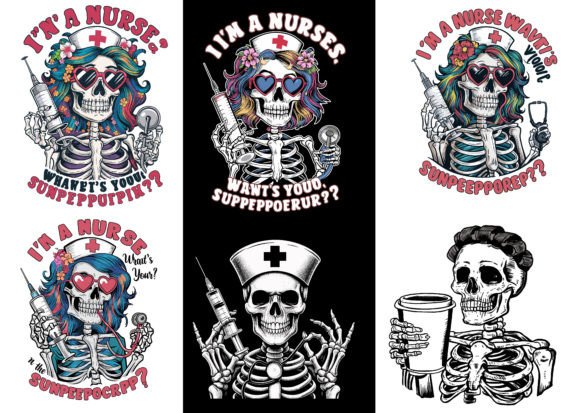
Sassy Nurse Skeleton Designs: A Designer's Review for Embroidery
As a designer who turns digital files into real, stitched products, my first question with any new embroidery design is simple: will it work in the real world? The Sassy Nurse Skeleton Sublimation set landed on my desk with a clear promise: inject humor into nursing-themed projects. Before I load it into the machine or promise it to a client, I need to judge its practical potential.
First Impression: Vibrant Personality Meets Practical Shape
The immediate mood is playful and confident. These aren't grim medical symbols; they’re colorful, character-driven illustrations with vibrant hair and heart motifs. The shapes are generally bold and open, which is a good starting point for embroidery. Areas like the skull and hair look designed for solid fill stitches, while details like the heart accents seem perfect for smaller satin stitch borders. The layout feels balanced, not overly cramped, which translates well to avoiding stitch density issues on fabrics like sweatshirts or tote bags.
Where This Design Naturally Belongs
My mind immediately goes to personalized gifts and boutique merchandise. Think of a custom embroidered tote bag for a nurse graduating her program, or a vibrant hoodie for a healthcare worker who loves a bit of lighthearted flair. The design’s theme makes it a strong candidate for holiday gifts—like a cheeky Christmas present for a nurse friend—or for small shop products aimed at the medical community. It would also shine as an embroidered patch on a backpack or apron, creating a statement piece.
Performance in Real-Life Embroidery Scenarios
Let’s walk through a typical scenario. I’m considering it for a custom embroidered sweatshirt for a client’s small business selling nurse-themed apparel. The colorful elements mean I need to plan my thread colors carefully to maintain that vibrancy on fabric. On a mid-weight cotton sweatshirt, with proper stabilizer, I expect the larger fill areas to stitch out cleanly. The design’s illustrative style should retain its clarity, making the finished product look professional and engaging—key for buyer trust and a polished handmade presentation.
For lighter projects, like a baby blanket or a kitchen towel meant as a gift, the playful nature fits, but I’d be cautious of scale. Embroidered on a baby item, I’d likely opt for a single, smaller motif from the set to maintain a delicate look. On a dark fabric background, the contrast of the colorful hair and heart details would be crucial; I’d absolutely test on scrap fabric first to ensure the thread colors pop.
Areas for Careful Application
No design is universally perfect. Here’s where I’d proceed with caution. The Sassy Nurse Skeleton Sublimation design, being an illustration, likely has some detailed corners and smaller accent areas. On textured or stretchy fabrics, or on curved surfaces like caps, those details could lose definition without meticulous stabilizer choice and hoop technique. Tiny lettering isn’t present here, but the smaller graphic elements demand attention in smaller hoop sizes.
Also, for products that need frequent washing—like apparel or kitchen towels—the stitch density in any filled areas must be appropriate for the fabric weight to prevent puckering or stiffness. This is a fundamental step: always stitch a test sample on your intended fabric. It’s the difference between a product that lasts and one that disappoints.
Impact on Product Value and Customer Appeal
From a business perspective, this design adds clear value. For an Etsy seller or creative entrepreneur, it offers a niche, engaging graphic that can differentiate a product line. An embroidered tote bag featuring this design feels like a specific, thoughtful gift, not a generic item. That boosts giftability and recognition. For branding, if your small shop caters to medical professionals with a sense of humor, it reinforces a consistent, friendly brand voice.
The visual appeal after stitching is what matters most. A well-executed embroidery of this design should look crisp and intentional. That stitching clarity directly affects customer perception of quality and your professionalism as a maker. It turns a digital graphic into a tangible, valuable finished product.
Practical Notes for the Embroidery Designer
Before you commit this to a client project or your own merchandise, here’s my checklist.
- Always test the embroidery file on scrap fabric matching your final product’s weight and texture.
- Review the stitch density in your software preview; look for any overly dense fill areas that might challenge lighter fabrics.
- Check thread color contrast against both light and dark fabric backgrounds. Don’t assume the colors will translate perfectly.
- Confirm the hoop size needed. Does the design scale well down for a cap or up for a pillow cover?
- Inspect small details, like the heart accents. Will they stitch clearly on your chosen item?
- Use proper stabilizer for the fabric. This is non-negotiable for preserving detail.
- Consider creating both black-and-white and color printable mockups for your digital product listings or craft fair previews.
- Most critically, confirm the licensing terms for this graphics set before selling any finished items or commercial embroidery projects. Ensure your use is permitted.
Remember, a design like Sassy Nurse Skeleton Sublimation is a starting point. Your skill in execution—from stabilizer choice to thread selection—determines its final success on a real-world product. It has the personality to stand out on custom apparel, handmade gifts, and small shop merchandise. Approach it with a practical eye, test thoroughly, and it can become a reliable asset in your embroidery project toolkit.